









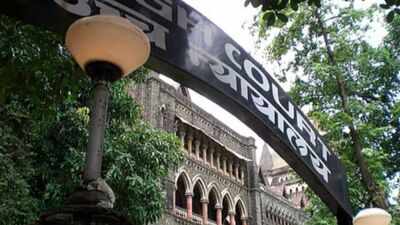
The Bombay High Court has refused to provide relief to a third-year psychology student who was barred from appearing for college examinations due to poor attendance. The court acknowledged her poor mental health but said compassion alone could not override academic rules.A division bench of Justices RI Chagla and Farhan Dubash said they were not insensitive to the student’s situation and extended their deepest sympathies to her and her family. However, the court emphasized that legal decisions must be based on existing rules.“Compassion, however, cannot supersede legal rights. The court is concerned with the legality of the decision, not with rewriting academic regulations or crafting exemptions that are not contemplated by the regulatory framework itself,” the judge said in the June 16 order. A copy of the verdict was released on Friday.The student, who is pursuing a bachelor’s degree in applied psychology from a college in Mumbai, had challenged the cease-and-desist letter issued on April 15. She requested permission to sit for a third-grade retest scheduled this month, arguing that a refusal would result in the loss of an entire school year and have a negative impact on her education and mental health.According to her petition, she maintained required attendance in previous semesters. However, during the last semester of the year, she was diagnosed with a mental illness and personality disorder that resulted in depression, impaired emotion regulation, and difficulty coping with stress.The plea further states that in March of this year, she experienced an acute medical episode that included suicidal thoughts and hallucinations. Her parents then took her back to her hometown in Uttar Pradesh for treatment and care.The student’s father notified the school of her condition. However, the court noted that no further information was sent to the institution regarding her continued absence from school. After nearly a month of absence, the school sent a cancellation letter, making her ineligible to retest for her final semester.After receiving the disqualification notice, the student’s father emailed the school requesting that she be allowed to sit the exam. The request went unanswered, the petition said.The High Court, while rejecting the request, said it had no reason to interfere with the university’s decision. The judge found that no special circumstances were found that warranted the cancellation of the cease and desist letter.The court also said it was not a medical expert and could not independently evaluate the psychiatric evaluation or medical records. It added that its role in academic matters was limited and educational institutions were best placed to regulate attendance requirements and academic standards.The bench further noted that attendance rules were uniformly applied and around 350 other students were also declared ineligible to appear in the examination due to insufficient attendance. It held that judicial interference in academic matters was unwarranted unless there was manifest arbitrariness or a violation of legal provisions.