






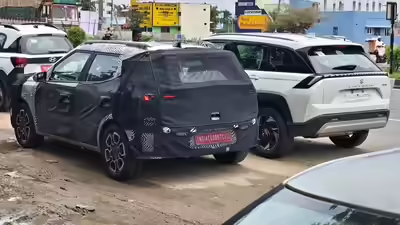
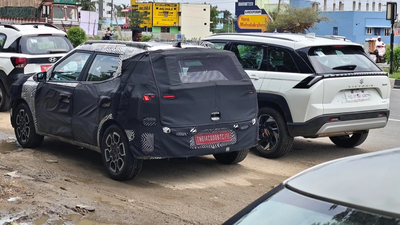
Hyundai Motor India has been continuously testing the upcoming Hyundai Bayon SUV. This time, the upcoming SUV has been spied alongside the Maruti Suzuki Victoris, which gives us an idea of its proportions. The Bayon appears noticeably more compact than the 4.3 meter Victoris. The visual comparison also suggests a shorter wheelbase, while its alloy wheels appear to be smaller in diameter than those fitted to the Victoris.Hyundai is preparing to introduce two new SUVs for the Indian market. Codenamed BC4, and at this stage, Hyundai has not officially confirmed the position of the next Bayon-based SUV. While some reports suggest that it will be a sub-four meter offering aimed at rivals such as the Maruti Suzuki Fronx, Toyota Taisor and Nissan Magnite, other reports indicate that it could measure more than four meters in length and be positioned between the Venue and Creta in Hyundai’s SUV portfolio. Until Hyundai reveals the official specifications, the exact segment of the SUV and the positioning are not clear.
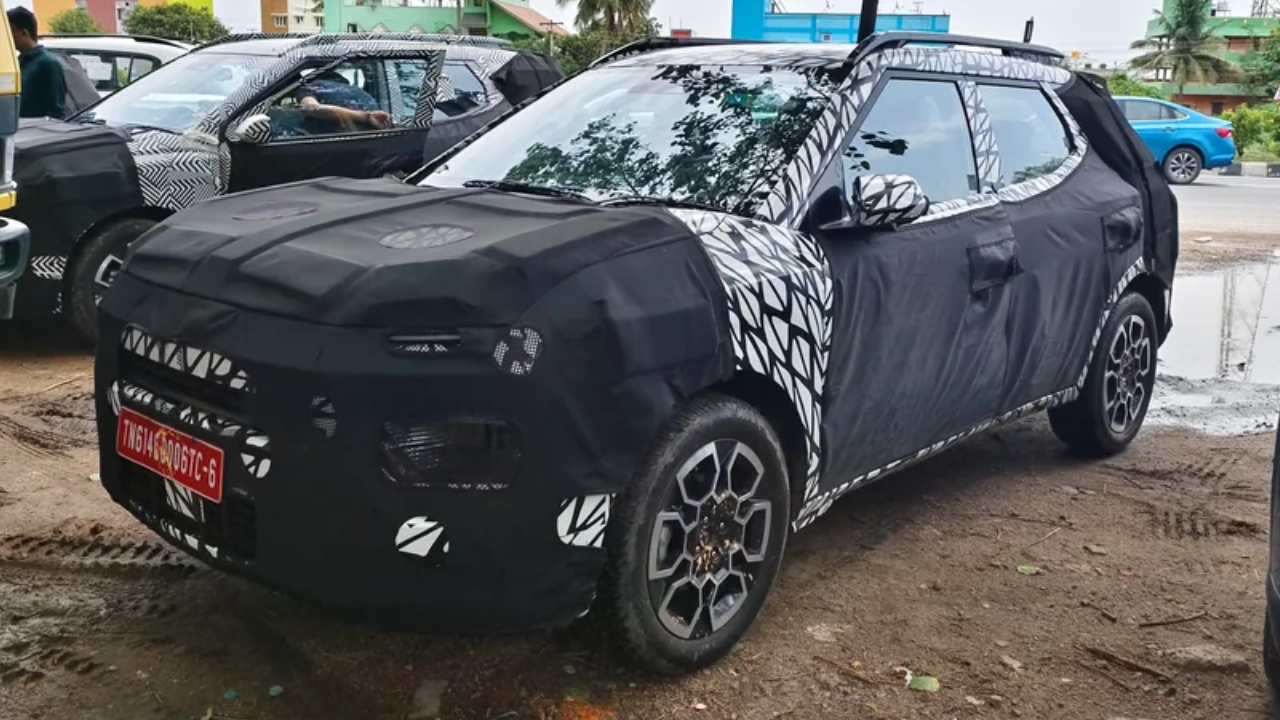
In terms of design, the front end of the Bayon will feature a split headlight layout similar to the current Venue, with slim LED daytime running lamps positioned above the main headlight units. Previous overseas sightings have also revealed black bumper cladding, front parking sensors and a radar module, suggesting the availability of advanced driver assistance systems.The side profile carries several styling cues from the international spec Bayon. The window line, roof profile and overall proportions look largely similar to the global model, while the alloy wheels feature a new design. Although the wheel size is not confirmed, the Bayon sold overseas is offered with wheels up to 16-inch.At the rear, the SUV continues with a split lighting arrangement. The lower section is expected to house the primary tail lamp units, while the upper part could accommodate indicators and reversing lamps. The test vehicle was also spotted with roof rails, rear parking sensors and a reversing camera.The interior of the standard model has not yet been photographed. However, an overseas sighting of the N Line version revealed an all-black cabin theme with contrast detailing and adjustable headrests. The production model is expected to feature a similar layout, albeit with a different color scheme. Although Hyundai has not disclosed the list of features, the SUV is likely to be equipped with a touchscreen infotainment system, a digital instrument cluster, connected car technology, automatic climate control, wireless charging and several safety features. Higher variants may also offer ADAS functions.Powertrain details also remain unknown; it is expected that the SUV could be powered by a naturally aspirated 1.2-litre petrol engine with a factory-fitted twin-cylinder CNG option. And also, a 1.0-liter turbo gasoline engine is expected.Image: Reddit/rCarsIndia