







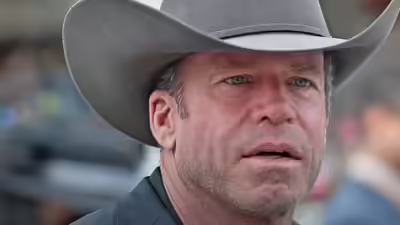
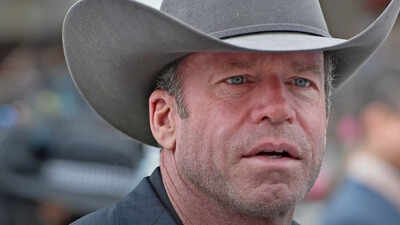
Taylor Sheridanthe writer and co-creator of ‘Yellowstone’, has voiced sharp criticism of Marvel films and the executives who oversee the studio’s modern productions. Sheridan expressed his frustrations with contemporary filmmaking practices and compared them to the first era of Hollywood storytelling.Taylor Sheridan explains his approach to screenwriting and what he believes separates quality storytelling from the shortcuts he sees prevalent in today’s entertainment landscape. His comments specifically targeted the storytelling techniques used by Marvel Studios, the company behind the major film franchises.
Taylor Sheridan’s basic narrative philosophy
Sheridan described his approach to screenwriting when he began his career. “What others do is take shortcuts. In fact, it breaks all the basic, basic rules of storytelling. Because they don’t know their story,” he said on the Bill Simmons Podcast on Sunday. Instead of following industry trends, Sheridan focuses on what others haven’t tried in their work.He outlined the core principles that he believed should guide filmmaking. “With a movie, you have to show me what’s happening. The camera has to move the story. The dialogue has to tell me how people in the world feel about what’s happening or what they hope to do or what they wish they hadn’t done or did.

Sheridan suggests that many modern executives lack experience in storytelling and interfere too much in the creative process. Image credit (Instagram)
Taylor Sheridan’s critique of Marvel’s storytelling approach
The conversation turned to how the major studios execute their films, and Sheridan was relentless in his assessment. “All these Marvel movies do this, ad nauseam. Where they only have dumps of information that you have to follow to get to the action rather than actually moving the plot with action,” he said of the approach taken by the superhero studio behind franchises including ‘Captain America’, ‘The Avengers’, and ‘Spider-Man’.According to Sheridan, this represents a departure from how the film industry has operated in previous decades. “It wasn’t before when Steve McQueen was a movie star at Paramount, and Bobby Evans ran the studio because the writers were gone. The directors became completely loose,” Sheridan reflected on the studio system in the early days.
The impact of executive involvement on creative work
Sheridan described the differences in how creative decisions were made in the first period he explained. “There is no endless rewriting. There are no meetings with executives about tone and mood and all this nonsense,” he said, comparing past practices to current studio operations where multiple layers of approval and change occur.

The writer argues that many superhero films rely on long throwaways instead of letting the action and visuals drive the plot. Image credit (Instagram)
Taylor Sheridan’s assessment of modern studio executives
Sheridan offers a pointed critique of the backgrounds and qualifications of contemporary studio leadership. “The studio executives and the network executives – these are the marketing executives, for the most part. Or maybe they’re studying law or whatever. Then they come, get a job in the mailroom of a talent agency or another major agency, and hate it. So they end up as an intern at a network. Then, through attrition, they find themselves head of development. Well, what do you know about making a story? “You don’t know anything,” he said.According to Sheridan’s assessment, this lack of narrative skill results in decision-making driven by fear rather than artistic vision. “That’s why they’re afraid, afraid that the audience won’t get it because they don’t really have storytellers”, he concluded, suggesting that the executive’s uncertainty about the understanding of the narrative drives the heavy approach to information that he criticizes.Sheridan’s comments reflect broader concerns within the creative community about how major studios balance commercial considerations with storytelling integrity in contemporary blockbuster filmmaking.